There is a number that every Indian entrepreneur needs to hear.
Thirteen.
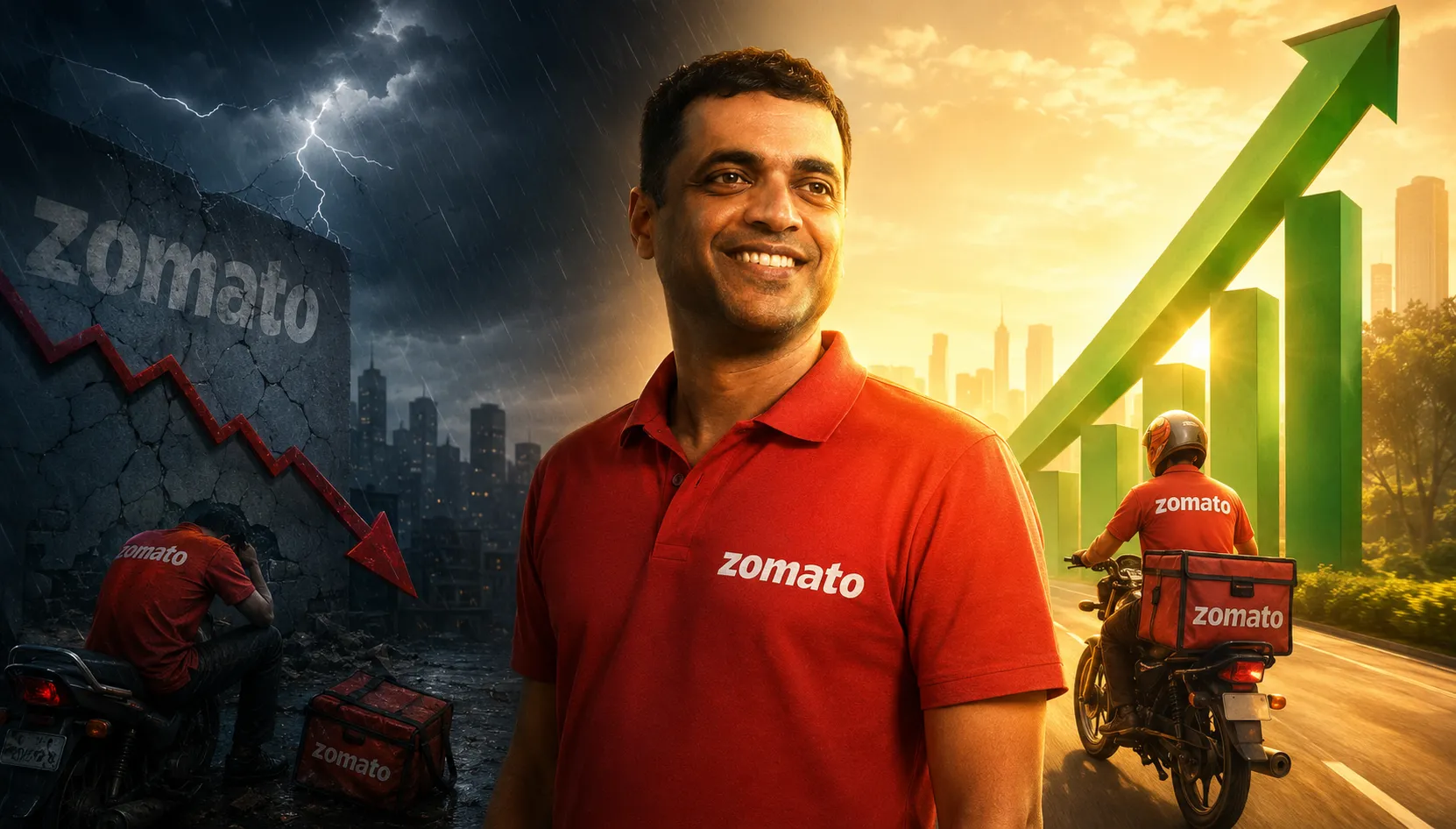
That is how many years Deepinder Goyal ran Zomato without making a single rupee of profit. Thirteen years of losses. Thirteen years of investors asking uncomfortable questions. Thirteen years of competitors trying to bury them.
And then — profit.
Zomato turned profitable with a net profit of Rs 63 crore in FY23, compared to losses in all prior years. And it did not stop there. The market cap of Zomato, now rebranded as Eternal, stands at over Rs 2,47,425 crore as of May 2026.
Deepinder Goyal — a guy who was just trying to solve a small lunch problem in his office — is today a billionaire.
But this story is not about money. It is about one of the most important qualities any entrepreneur can have — the patience to keep going when the numbers are ugly, the competition is fierce, and everyone around you is questioning your judgment.
In this article you will learn how Zomato started from a simple office problem, how they survived 13 years without profit, the Blinkit bet that changed everything, and what every founder in India must take away from this journey.
Let’s start from the beginning.
Background and Origin Story: A Lunch Problem That Built a Billion Dollar Company
Deepinder Goyal grew up in Muktsar, a small town in Punjab. He studied at IIT Delhi and graduated with a degree in mathematics and computing.
After IIT, he joined Bain and Company, one of the world’s top management consulting firms. Good salary. Prestigious job. Comfortable life.
But something small annoyed him every single day.
At lunch, he and his colleagues would spend 15 to 20 minutes trying to figure out what to order. The menus of nearby restaurants were scattered — some pinned to notice boards, some floating around the office, most impossible to find quickly.
One day in 2008, Deepinder scanned some restaurant menus and put them up on the Bain intranet. His colleagues went crazy over it. Suddenly everyone could find menus instantly. Orders were placed faster. The lunch problem was solved.
That small moment was the seed of what would become India’s largest food platform.
FoodieBay — The Accidental Startup
Zomato was founded as FoodieBay in 2008 and was renamed Zomato in 2010 as it expanded across major Indian cities.
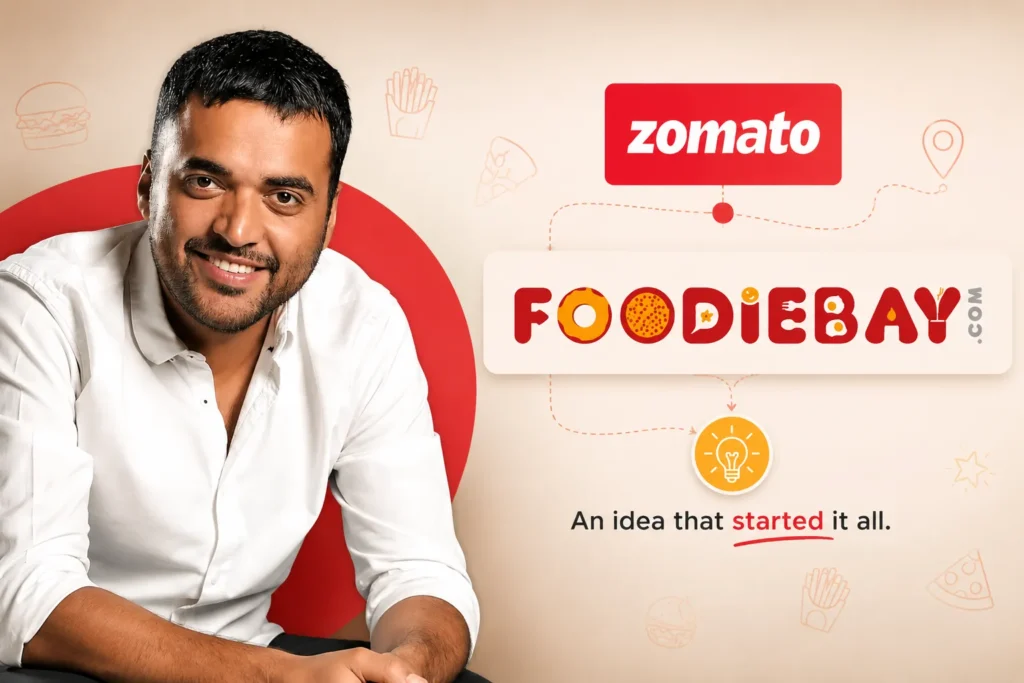
Deepinder co-founded it with his IIT Delhi batchmate Pankaj Chaddah. The initial concept was simple — a website where you could find menus and reviews of restaurants in your city. No delivery. No ordering. Just discovery.
The product was genuinely useful. People were tired of not knowing what a restaurant served before they visited. Zomato solved that problem cleanly.
By 2011, Zomato had established a strong presence in Delhi NCR and began expanding to Mumbai, Bangalore, and other major cities. The restaurant discovery business was growing fast.
The Growth Story: From Menus to Millions
2010 to 2014 — Building the Discovery Platform
The early years were about building the most comprehensive restaurant database in India.
Zomato sent field teams to every restaurant in every city — photographing menus, collecting information, writing descriptions. This was unglamorous, expensive, manual work. But it built something competitors could not easily replicate — the most complete restaurant information platform in India.
By 2012, Zomato had expanded internationally into Sri Lanka, UAE, UK, and other markets. By 2014, they were present in over 20 countries. This was aggressive and arguably too aggressive — spreading thin across markets before the core business was truly profitable.
But the international expansion did one important thing. It made Zomato look like a global company, which attracted global investors. Funding came in steadily from Info Edge, Sequoia India, and others.
2015 — Food Delivery Changes Everything
Until 2015, Zomato was purely a discovery and review platform. Restaurants paid for premium listings. That was the business.
Then Swiggy launched in 2014 and began offering food delivery — something Zomato was not doing. Swiggy was growing fast. Zomato had a choice — ignore delivery or enter it.
They entered it.
In 2015, Zomato launched food delivery in India. This was a massive operational shift. Discovery is a technology business — delivery is a logistics business. Suddenly Zomato needed delivery partners, real-time tracking, packaging standards, and a completely different operational muscle.
The costs went up dramatically. But so did the opportunity.
2017 to 2019 — The Brutal War With Swiggy
The years from 2017 to 2019 were defined by one thing — a ruthless, expensive, painful battle with Swiggy for the Indian food delivery market.
Both companies burned enormous amounts of cash to acquire customers and delivery partners. Discounts. Free deliveries. Cashbacks. Both sides were losing money at scale.
Zomato raised hundreds of millions of dollars to keep fighting. Swiggy did the same. Neither was profitable. Both were growing.
Zomato also made one strategic mistake during this period — they tried to be present in too many international markets simultaneously. Eventually they pulled back from several countries to refocus on India. This was the right call, but it cost time and money.
2020 — COVID, Disaster and Opportunity Together
The pandemic hit Zomato hard at first. Restaurants shut. People stopped ordering food outside. For a food delivery company, this was an existential moment.
But within weeks, the script flipped. People stuck at home needed food delivered. Cooking fatigue set in. And Zomato was there to serve them.
The pandemic accelerated India’s adoption of food delivery by years. Order volumes recovered and then exceeded pre-pandemic levels. New users who had never ordered online began using Zomato out of necessity.
2021 — The IPO
In July 2021, Zomato went public on Indian stock exchanges. They raised Rs 9,375 crore — approximately $1.3 Billion. The IPO was oversubscribed massively. India’s retail investors were excited about backing a home-grown tech company.
The listing was a success. Zomato’s share price rose strongly on debut. The company was valued at approximately $13 Billion at listing.
But there was one important fact that everyone acknowledged — Zomato was still not profitable at the time of the IPO. Investors were betting on future profitability, not present earnings.
2022 — The Blinkit Bet
In 2022, Zomato made the boldest decision in its history.
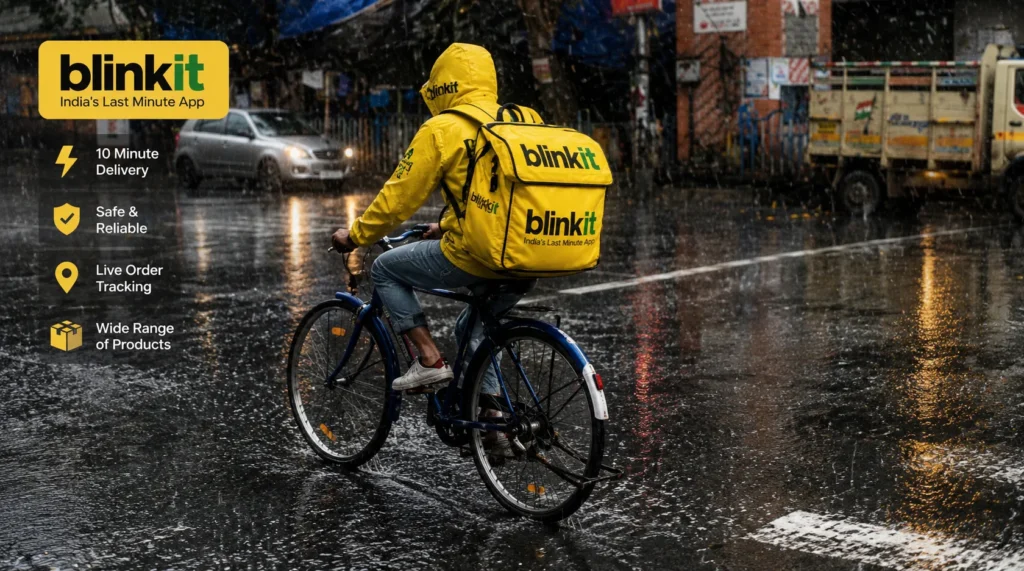
They acquired Blinkit — then called Grofers — India’s leading quick commerce platform, for approximately $700 Million. Quick commerce means grocery and essentials delivery in 10 to 20 minutes.
At the time of acquisition, many analysts questioned the move. Grofers had been struggling. Quick commerce was unproven at scale. And Zomato was spending enormous capital on a business that was losing money.
Deepinder was convinced India was ready for instant delivery of everything — not just food. He was right.
2023 — Profit, Finally
Zomato turned profitable with a net profit of Rs 63 crore in FY23 — after 13 straight years of losses.
Thirteen years after starting. After raising billions. After fighting Swiggy. After the failed international expansion. After the pandemic. After the Blinkit acquisition.
Finally — profit.
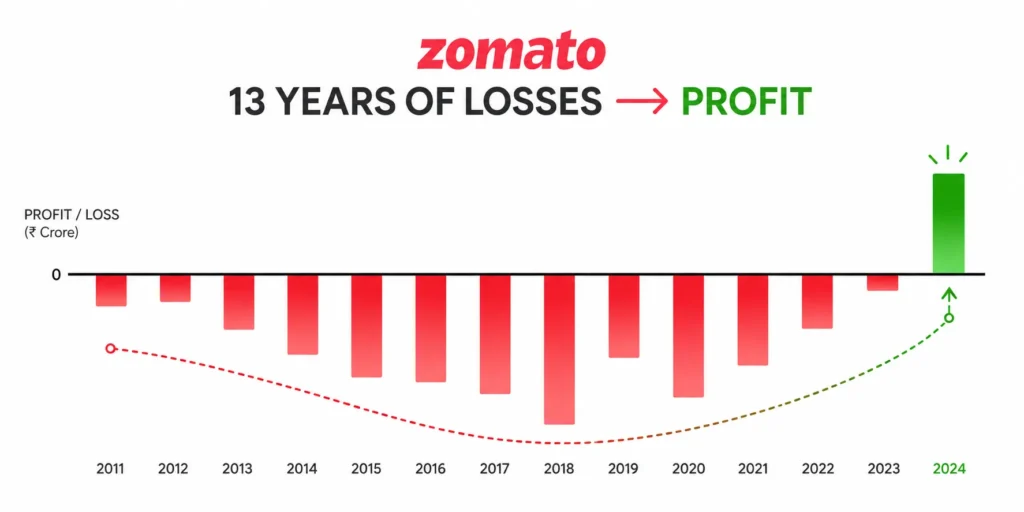
It was a small number. But it was the signal that the business model worked. That the losses were investments, not just waste. That patience had a point.
The Business Model — How Zomato Actually Makes Money
Four Businesses Under One Roof
In March 2025, Zomato officially rebranded its corporate entity to Eternal Limited. Eternal today comprises four major businesses — Zomato food delivery, Blinkit quick commerce, District for dining out and events, and Hyperpure for B2B restaurant supplies.
Each of these is a meaningful business in its own right.
Food Delivery — The Core
Zomato made 38.3% of its total operating revenue via the food ordering and delivery business in Q3 FY25.
Revenue comes from three places — delivery fees charged to customers, commissions charged to restaurants on every order, and advertising fees from restaurants who want better visibility on the platform.
Blinkit — The Growth Engine
Blinkit operates a network of dark stores — small warehouses positioned strategically in neighbourhoods — from which orders are dispatched within minutes. Blinkit revenue grew 117% year on year in Q3 FY25, contributing Rs 1,399 crore to group revenue.
Revenue comes from delivery fees, product margins, and advertising from brands who want placement in Blinkit’s app.
Hyperpure — The B2B Arm
Hyperpure supplies fresh ingredients and groceries directly to restaurants — cutting out unreliable middlemen and ensuring quality. Revenue grew 13.4% to Rs 1,671 crore in Q3 FY25. Restaurants pay Zomato directly for these supplies.
District — Dining Out and Events
District is Zomato’s play for the going-out economy — table reservations, event tickets, and experiences. This is a newer and smaller business but growing quickly as India’s urban consumers spend more on experiences.
The Role of Technology and AI
Zomato’s technology is deeply sophisticated behind the scenes.
AI optimises delivery routing in real time — deciding which delivery partner picks up which order to minimise total delivery time across hundreds of simultaneous orders in a single city. Personalisation shows you restaurants and dishes you are most likely to order based on past behaviour. Demand forecasting helps Blinkit predict which products will run out and when, so dark stores are stocked appropriately. Surge pricing adjusts delivery fees based on weather, time of day, and demand — maximising revenue during peak periods.
The technology gets better with every order placed — more data means better predictions means better experience.
Key Lessons For Entrepreneurs — What Zomato Teaches Us
Lesson 1 — Patience Is a Competitive Advantage
Zomato lost money for 13 straight years. In most companies and most cultures, this would have been considered failure. Investors would have pulled out. The founder would have given up.
Deepinder kept going because he believed in two things — the size of India’s food market and his team’s ability to eventually crack unit economics.
He was right on both counts. But being right takes time. And most entrepreneurs give up before time is on their side.
The question is not just whether your business is going to work. The question is whether you have the patience and the resources to survive until it does.
Lesson 2 — The Courage to Make the Uncomfortable Bet
The Blinkit acquisition was deeply unpopular when it happened. Analysts questioned it. Shareholders were unhappy. The price looked high for a struggling business.
Deepinder did it anyway because he saw something others did not — that the infrastructure for instant delivery, once built, would be enormously valuable and very hard to replicate.
Zomato has invested Rs 2,800 crore in Blinkit since the acquisition. And Blinkit is now one of India’s most important quick commerce platforms, growing at over 100% year on year.
The best business decisions often look wrong before they look right. The founders who change industries are the ones who can hold conviction under pressure.
Lesson 3 — Retreat to Win
Zomato expanded to 20 plus countries. Then they pulled back from most of them to focus on India.
This felt like failure at the time. Shutting down international operations. Writing off years of work. Admitting that the global expansion was too fast.
But this retreat is what saved Zomato. By focusing all their energy and capital on India — the one market they truly understood — they were able to compete properly with Swiggy and build sustainable operations.
Knowing when to pull back is as important as knowing when to push forward. Focus is not weakness — it is strategy.
Challenges and Setbacks — The Struggles Behind the Success
The International Expansion Failure
Zomato’s expansion to 24 countries was their most expensive mistake. Running restaurant discovery in the UAE, UK, US, Australia, and dozens of other markets required enormous resources — local teams, local marketing, local restaurant partnerships.
Most of these markets did not generate returns proportional to the investment. Between 2019 and 2021, Zomato exited most international markets. Years of work were written off.
The lesson was expensive but clear — international expansion is not a shortcut to scale. It is a multiplier of your problems if your core market is not yet profitable.
The Swiggy War
The years-long battle with Swiggy cost both companies billions. Massive discounts. Free deliveries. Marketing wars. Both companies lost money at extraordinary rates trying to outgrow each other.
This was ultimately good for Indian consumers — who got incredible value — but terrible for both companies’ finances. Neither could afford to stop discounting because the moment they did, the other would take market share.
The war only stabilised when both companies grew large enough that the market could sustain two serious players.
The 13 Year Profitability Question
For years, investors and analysts questioned whether food delivery could ever be profitable in India. The margins were thin, the competition was brutal, and delivery costs were high.
Zomato’s answer was to keep improving unit economics — reducing delivery costs through better routing, increasing average order values, growing the higher-margin advertising business, and expanding Hyperpure’s B2B operations.
It took 13 years. But it worked.
Where Are They Now — Eternal in 2025 and 2026
Zomato officially rebranded its corporate entity to Eternal Limited with effect from March 20, 2025. The stock ticker changed from ZOMATO to ETERNAL. The corporate website moved from zomato.com to eternal.com. The Zomato food delivery app name remains the same.
The rebranding reflects the company’s evolution beyond food delivery. Eternal today comprises Zomato, Blinkit, District, and Hyperpure — four distinct businesses under one corporate umbrella.
The market cap of Eternal stands at over Rs 2,47,425 crore as of May 2026. For the full year FY2026-27, revenue reached Rs 55,760 crore and profit touched Rs 366 crore.
Deepinder Goyal, who started by scanning restaurant menus in his office, is today one of India’s most respected entrepreneurs and a billionaire.
The company he built is no longer just a food delivery app. It is a platform that touches how urban India eats, shops, goes out, and thinks about instant convenience.
Conclusion — The Real Zomato Lesson
The Zomato story is really a story about one thing — time.
Most businesses that seem like overnight successes are actually decades of persistence made visible. Zomato lost money every year for 13 years. Nobody watching from outside would have predicted that this company would one day be worth over Rs 2,47,000 crore.
But Deepinder kept showing up. Kept improving. Kept making bets. Pulled back when he was wrong. Pushed forward when he was right.
The Blinkit acquisition, which looked questionable in 2022, looks like genius in 2026. The international retreat, which looked like failure in 2019, looks like wisdom today.
Entrepreneurship rewards patience and punishes impatience. It rewards focus and punishes distraction. And it rewards the founders who are honest about what is working and what is not.
Zomato was honest. Zomato was patient. Zomato won.
If you are building something in India today and the profitability is not there yet — that does not mean you are failing. It might mean you are still in the 13 years.
Keep going.
Want to read more Indian startup stories like this? Head over to bizfromzero.com for honest deep-dives into how India’s biggest companies were built from zero.